Why Sweat-Induced Forehead Lines Are More Common in the GCC

In the GCC, the forehead often becomes the first place where climate shows up on the face. At Pro Derma Clinic, serving Dubai since 2010, we see this pattern repeatedly: patients who are otherwise early in the ageing curve begin noticing upper-face creasing sooner than expected, especially after long summers and sustained sun exposure. That observation fits our clinic philosophy of real results, safe non-surgical care, and personalised treatment plans built around natural radiance, refined texture, and quiet confidence, not one-size-fits-all wrinkle correction at an aesthetic clinic Dubai.
Sweat Does Not Cause Wrinkles Directly
First, clinical clarification matters. Sweat itself does not carve a wrinkle into the skin. Forehead lines form when repeated contraction of the upper facial muscles is transmitted to the overlying skin through a tight skin–connective tissue–muscle unit. Over time, dynamic lines that appear during expression can become static lines that remain visible at rest, especially as dermal support declines. In other words, “sweat-induced forehead lines” is a useful shorthand, but the true mechanism is repeated movement plus environmental aging.
Why This Is More Common In The Gulf
Why does this mechanism appear so often in the Gulf? Because the climate load is unusually high. The World Meteorological Organization says 2024 was the hottest year on record for the Arab region, that temperatures there are rising at roughly twice the global average, and that heatwaves are becoming longer and more intense. In Dubai specifically, the average high reaches 38.1°C in June and 39.4°C in July, while the city’s average UV index peaks at 9 in summer. WHO guidance is clear that once the UV Index reaches 8 or above, midday exposure should be avoided and full sun protection becomes essential. In practical skin terms, that means more heat, more sweating, more glare, and more months each year in which the forehead is under continuous environmental stress.
Why The Forehead Is Especially Affected
There is also an anatomical reason the forehead becomes the stage for this problem. Eccrine sweat glands are particularly abundant in the forehead, which makes the upper face one of the most visibly reactive areas during heat exposure. Broader dermatology data show that hyperhidrosis may affect at least 4.8% of the U.S. population, with about 93% of cases being primary, and a vascular surgery review estimates that roughly 9.41% of hyperhidrosis presentations are craniofacial. Those figures are not GCC-specific prevalence numbers, but they are still clinically useful because they confirm a basic point: facial sweating is a recognised medical pattern, not simply a matter of “being nervous” or “not tolerating heat well.”
How Sweat Contributes To Forehead Lines
So where does sweat enter the wrinkle equation? It acts as an amplifier of facial behaviour. When perspiration moves toward the brow and eye area, people instinctively recruit the forehead lifting the brows, narrowing the eyes against glare, and wiping the upper face more often. This part is a clinical inference rather than a single quantified GCC trial, and it is important to say that plainly. Still, the inference is well aligned with what upper-face anatomy and wrinkle science already show: repetitive muscle pull, transmitted repeatedly through the skin, is exactly how forehead lines become established and then deepen as elasticity falls.
The Role Of Photoaging
The second amplifier is photoaging. A long-standing review in the Journal of the American Academy of Dermatology identifies repeated ultraviolet exposure as the most significant environmental driver of extrinsic skin ageing. Once collagen and elastic support are weakened, the same expression leaves a deeper mark. That is why two patients of similar age can present very differently in Dubai: the patient with chronic sun exposure, strong light reflexes, and repeated upper-face contraction usually develops earlier and more persistent forehead lines than the patient with stronger photoprotection habits.
How Pro Derma Clinic Approaches Treatment
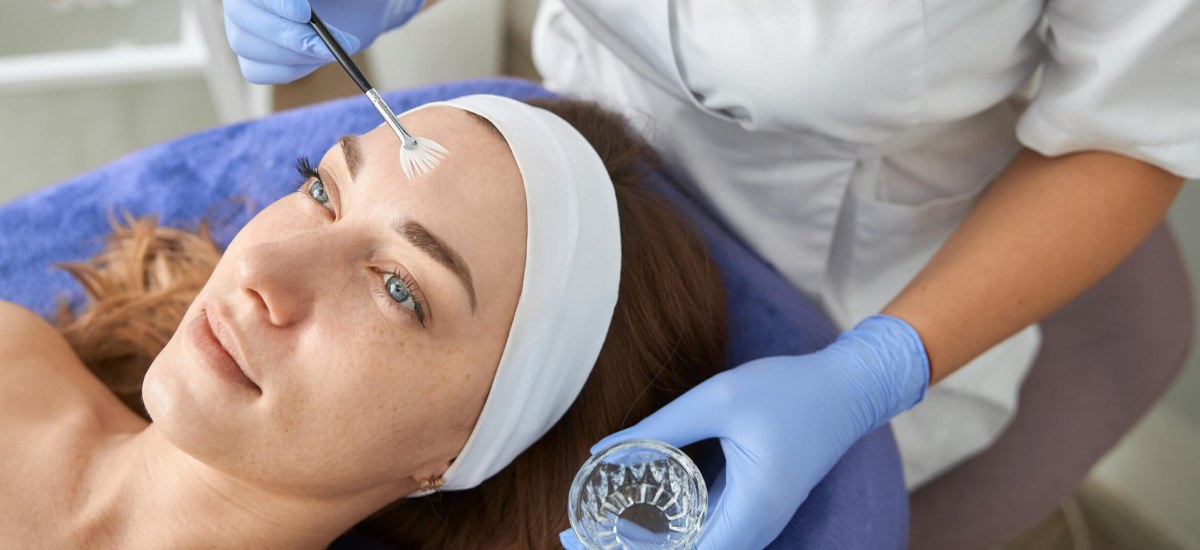
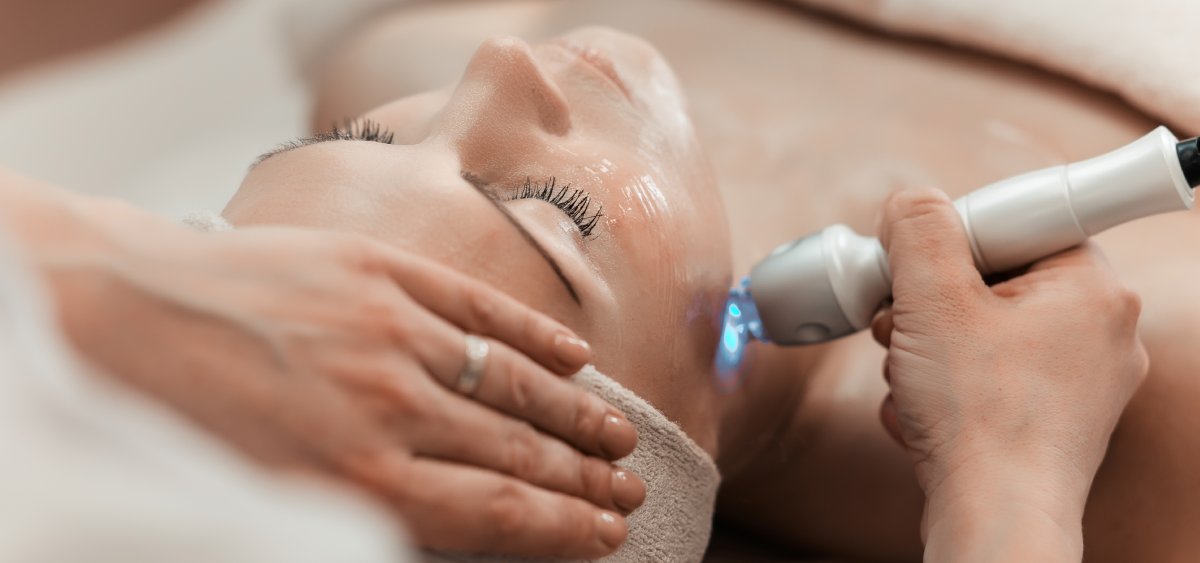
At Pro Derma Clinic, we therefore do not treat forehead lines as an isolated cosmetic complaint. We assess movement patterns, sun history, skin texture, pigmentation, and barrier resilience before choosing a plan. Depending on skin type and wrinkle depth, that plan may include anti-wrinkle therapy to reduce excessive muscular pull, supported by skin-quality treatments such as microneedling with RF, chemical peels, laser renewal, and disciplined photoprotection in a skin treatment clinic setting. This is consistent with the approach presented across our website: science-led, personalised, and focused on results that feel natural and last.
What This Means In Practice
So, are sweat-induced forehead lines more common in the GCC? In practical dermatology terms, yes but not because sweat alone cuts a crease into the skin. They are more common because the Gulf environment combines an eccrine-active forehead, prolonged heat exposure, strong UV burden, and repeated brow recruitment into one daily pattern. If your forehead seems to “crease first” in Dubai, the right question is not only what product you are using; it is what your climate is asking your skin to do every day. Once that mechanism is understood, prevention becomes more intelligent and treatment becomes far more precise.