

Patient Awareness and Delay in Mole Evaluation: A Public Health Perspective
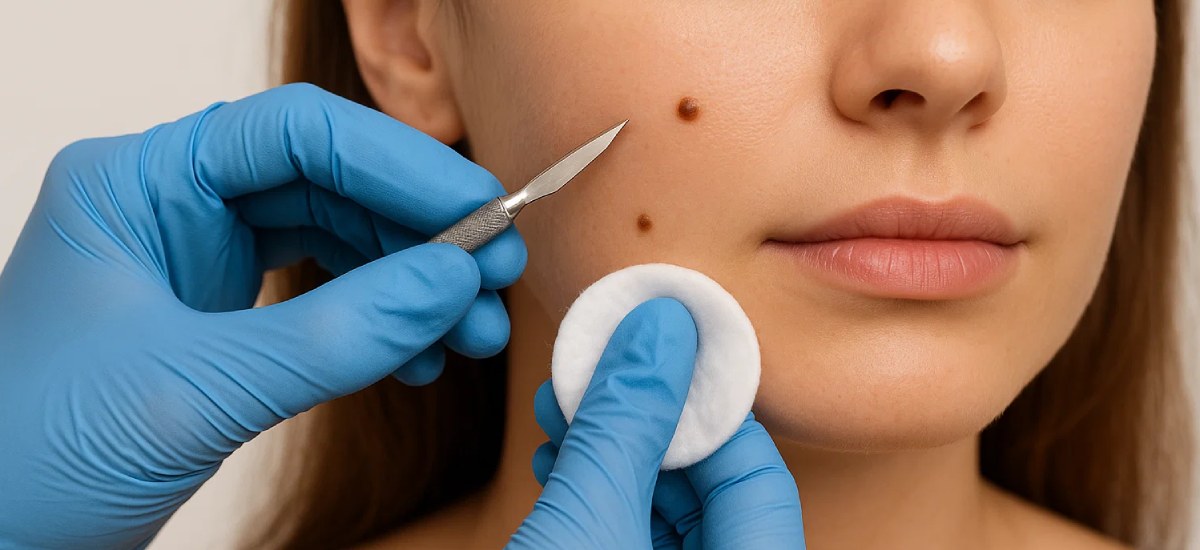
Skin cancer and other dermatological issues require immediate attention in the ever-changing global health landscape, where non-communicable diseases are placing an increasing burden on healthcare systems. Delays in evaluating moles stand out among these as a crucial but frequently disregarded public health issue. Early treatment success and late-stage intervention with significant morbidity, death, and expense can depend on how quickly a person recognises and gets medical counsel about an evolving mole. This study examines the relationship between patient awareness, diagnostic delays, epidemiology, and the wider consequences for public health, especially in sun-rich areas like the United Arab Emirates, where citizens are increasingly seeking expert dermatological care and safe wart removal Dubai.
The Hidden Cost of Delay: Behavioral and Clinical Insights
Delays in evaluating suspicious moles are not merely anecdotal; they are statistically documented. Research has shown that approximately 27–40 % of melanoma patients delay seeking medical care for more than three months after noticing concerning changes in a mole’s growth in size, being the most commonly cited symptom linked to delay. This “window of hesitation” dramatically increases the likelihood of diagnosing melanoma at a more advanced, less treatable stage.
Globally, studies like the HELIOS Project reveal that over half of people surveyed had never had a mole evaluated by a dermatologist in their lifetime, and only a minority engage in regular professional mole checks. This low uptake reflects both limited awareness of the risks associated with mole changes and significant barriers in translating concern into action.
Compounding this issue, qualitative research indicates that lay perceptions of moles often trivialize potential danger. Many individuals regard mole changes as benign or fail to associate them with serious conditions like melanoma, unless the changes are dramatic or accompanied by pain. This cognitive under-estimation can postpone professional evaluation—sometimes until it is too late.
Awareness Gaps: A Global and Regional Challenge
Public understanding of mole risk is generally insufficient. Surveys in multiple regions consistently show that large proportions of people either do not recognize melanoma risk factors or are unaware of how to perform effective skin self-examination. In one study, nearly 81 % of participants were unaware of melanoma, and about 70 % had never conducted a self-body skin check, even though more than half had moles on their bodies.
In the UAE, similar knowledge gaps have been documented. According to a cross-sectional survey, more than 70% of participants mentioned ignorance of skin cancer and the necessity of screening as the biggest obstacles to proactive skin health behavior. Given that skin cancer is the fourth most common malignancy diagnosed in the United Arab Emirates, with cases about tripling over the previous ten years, this is especially startling. A critical public health gap is highlighted by the combination of low risk perception, cultural norms around health-seeking, restricted self-examination practices, and environmental exposure: people do not take action until symptoms become concerning, frequently when intervention is more intrusive and less successful.
Evaluation Obstacles: Beyond Awareness
Unpacking structural, cultural, and individual hurdles is necessary to comprehend why patients put off mole evaluation:
Perceptual obstacles
Particularly when there are no symptoms like pain or bleeding, many people are unable to identify small changes in moles or comprehend their significance.
Educational obstacles
Targeted outreach can cut down on delays because formal education level and exposure to health initiatives have been associated with earlier presentation.
Obstacles to healthcare access
Initial appointments may be delayed by insurance restrictions, financial worries, and uncertainty about where to get specialised care.
Psychological factors
- Fear, denial, and mistrust of medical procedures often cause hesitation, particularly when asymptomatic lesions are involved.
- These barriers are not unique to one country but reflect a global health pattern that demands nuanced, culturally competent public health strategies.
Public Health Implications and Solutions
requires surgery, immunotherapy, and long-term monitoring, early-stage melanoma is substantially less expensive to treat and has much greater survival rates.
Therefore, the following must be given top priority in effective public health strategies:
Campaigns for Awareness
To raise awareness of mole hazards, particularly in areas with high UV exposure like Dubai and the larger UAE, mass media and community outreach should be used.
Screening Programs
Promoting regular skin examinations and dermatologist appointments that include mole mapping and monitoring tools according to the demographics of the local population.
Primary Care Education
Teaching non-dermatologic medical professionals how to spot worrisome moles and make quick referrals in order to incorporate skin examinations into routine health examinations.
Cultural Engagement
Leveraging local influencers, workplaces, schools, and community groups to normalize skin examinations and demystify dermatologic care.
In sun-intense climates, where daily activities can cumulatively cause UV damage independent of holidays or beach exposure, embedding skin health into general preventive care becomes especially critical.
Bridging to Related Dermatology Services: A Note on Safe Warts Removal Dubai
Although the focus of this debate is on molar lesions and the risk of skin cancer, it is important to put it in the context of more general dermatological care alternatives, such safe wart removal in Dubai. Similar to moles, warts are common skin lesions that might affect a patient’s behavior related to skin health. Patients’ engagement with dermatologic care, especially melanoma risk management, can be improved by teaching them the value of professional treatment rather to over-the-counter or unregulated removals.
Summarization
A hidden but serious public health concern, delayed examination of moles is caused by systemic impediments, perceptual biases, and knowledge gaps. Health educators, physicians, legislators, and communities must work together across several sectors to close these gaps. In regions like the UAE, where skin cancer incidence is rising and sun exposure is endemic, the urgency is only growing. Empowering individuals with clear, actionable knowledge, easy access to professional care, and culturally relevant interventions can dramatically shift the narrative from delay and despair to early action and better outcomes.